
AI Augments Rather Than Replaces Work, Anthropic Study Finds
New research from Anthropic challenges the narrative that AI will eliminate jobs, revealing instead that artificial intelligence is designed to enhance human productivity and create new economic opportunities across industries.
The AI Job-Killer Narrative Meets Reality
The fear that artificial intelligence will render human workers obsolete has dominated headlines for years. But a new study from Anthropic challenges this doomsday scenario, presenting evidence that AI is fundamentally designed to augment human labor rather than eliminate it. According to Anthropic's latest research, the relationship between AI and employment is far more nuanced than the zero-sum game many feared.
Axios reports on the findings, which suggest that AI tools are creating complementary workflows where humans and machines work in tandem. This distinction matters enormously for policymakers, business leaders, and workers grappling with rapid technological change.
What the Research Reveals
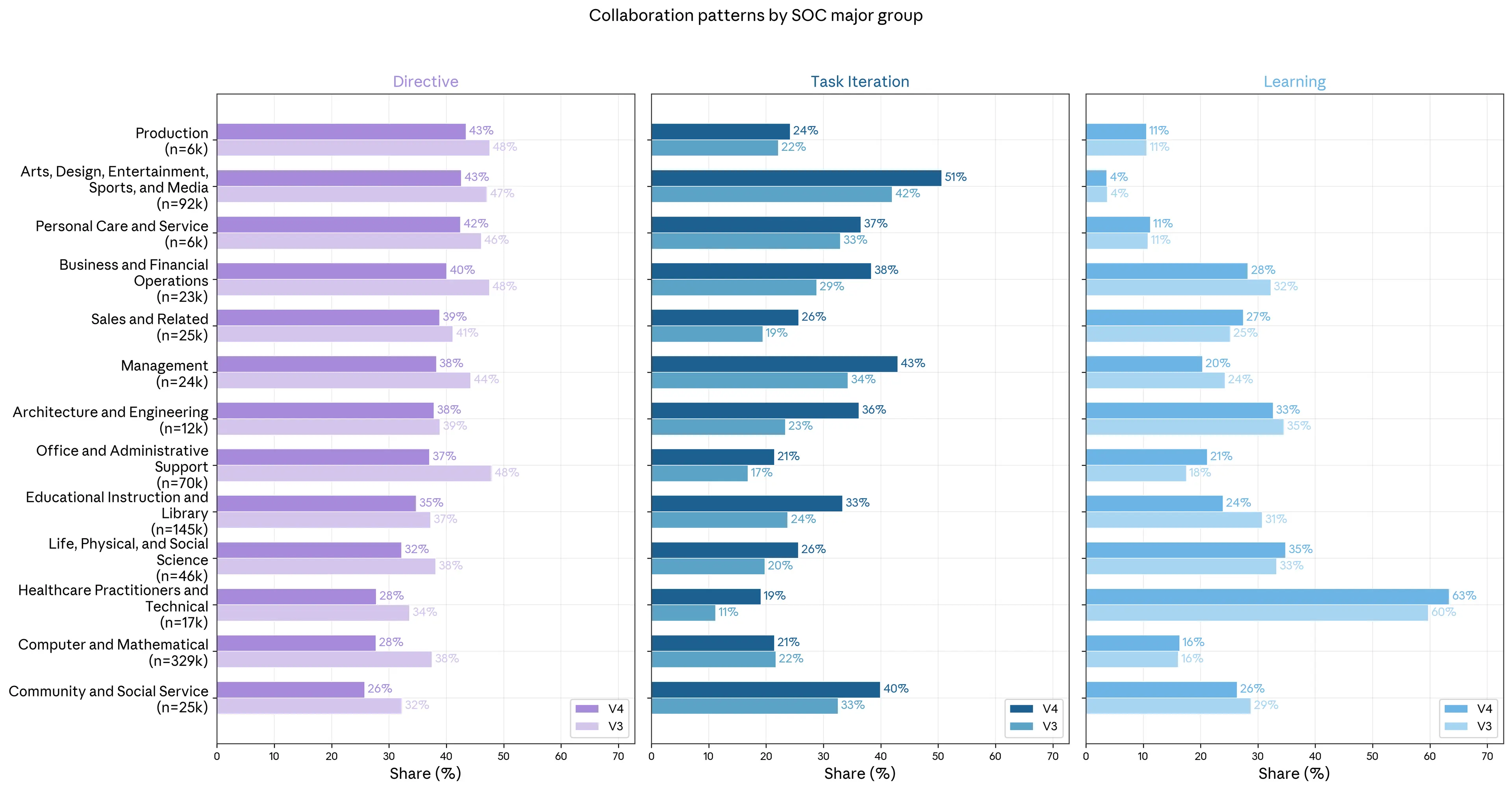
Anthropic's Economic Index study examined how AI systems interact with human labor across multiple sectors. The key finding: rather than replacing workers, AI is reshaping job functions to focus on higher-value tasks. Fortune's coverage highlights the complexity of this transition, noting that job displacement concerns remain valid in specific sectors, but the overall trajectory points toward augmentation.
The research identifies several critical patterns:
- Productivity Enhancement: AI handles routine, repetitive tasks, freeing humans to focus on creative problem-solving and strategic decision-making
- Skill Elevation: Workers using AI tools report increased job satisfaction and opportunities for upskilling
- Economic Expansion: New roles emerge as AI capabilities unlock previously uneconomical business opportunities
- Sector Variation: Impact differs significantly across industries, with some seeing faster adoption than others
The Economic Primitives Framework
Central to Anthropic's analysis is their Economic Index framework, which breaks down how AI affects economic activity at a fundamental level. Rather than viewing AI as a monolithic force, the framework examines specific economic primitives—the basic building blocks of how value is created and distributed.
This approach reveals that AI's impact depends heavily on implementation strategy. Organizations that treat AI as a replacement tool face disruption; those that use it as an augmentation layer see productivity gains. The distinction is critical for understanding why some sectors experience job growth while others face contraction.
Broader Implications for Scientific and Economic Progress
Anthropic's findings align with broader research on how AI accelerates scientific research. When AI handles data processing, pattern recognition, and preliminary analysis, human researchers can focus on hypothesis generation, experimental design, and interpretation—the uniquely human aspects of scientific discovery.
This pattern repeats across domains. In software development, AI handles code generation and testing; developers focus on architecture and user experience. In healthcare, AI assists with diagnostics; physicians concentrate on treatment planning and patient care. In finance, AI processes market data; analysts focus on strategy and risk assessment.
The Nuance Matters
While Anthropic's research offers reassurance, it's not a blanket guarantee against disruption. Certain roles—particularly those involving routine data entry, basic customer service, or straightforward content generation—face genuine pressure. The study suggests that transition support, retraining programs, and policy frameworks become essential to managing this shift equitably.
The real story isn't whether AI will change work; it clearly will. The question is whether organizations and policymakers will proactively manage that transition to maximize augmentation benefits while minimizing displacement costs.
Anthropic's research provides a data-driven counterweight to both utopian and dystopian narratives about AI's economic impact. The evidence suggests the future of work isn't about humans versus machines—it's about how effectively we integrate them.
Tags
Enjoyed this article?
Get the top AI stories delivered to your inbox every week. No spam, just the news that matters.
Join our weekly newsletter. Unsubscribe anytime.