

NVIDIA unveils DSX POD, a containerized blueprint for AI factories
NVIDIA introduced DSX POD at GTC Berlin, a partner-built containerized reference design for Vera Rubin AI factories that it claims cuts deployment from six months to as little as 14 days at prepared sites.
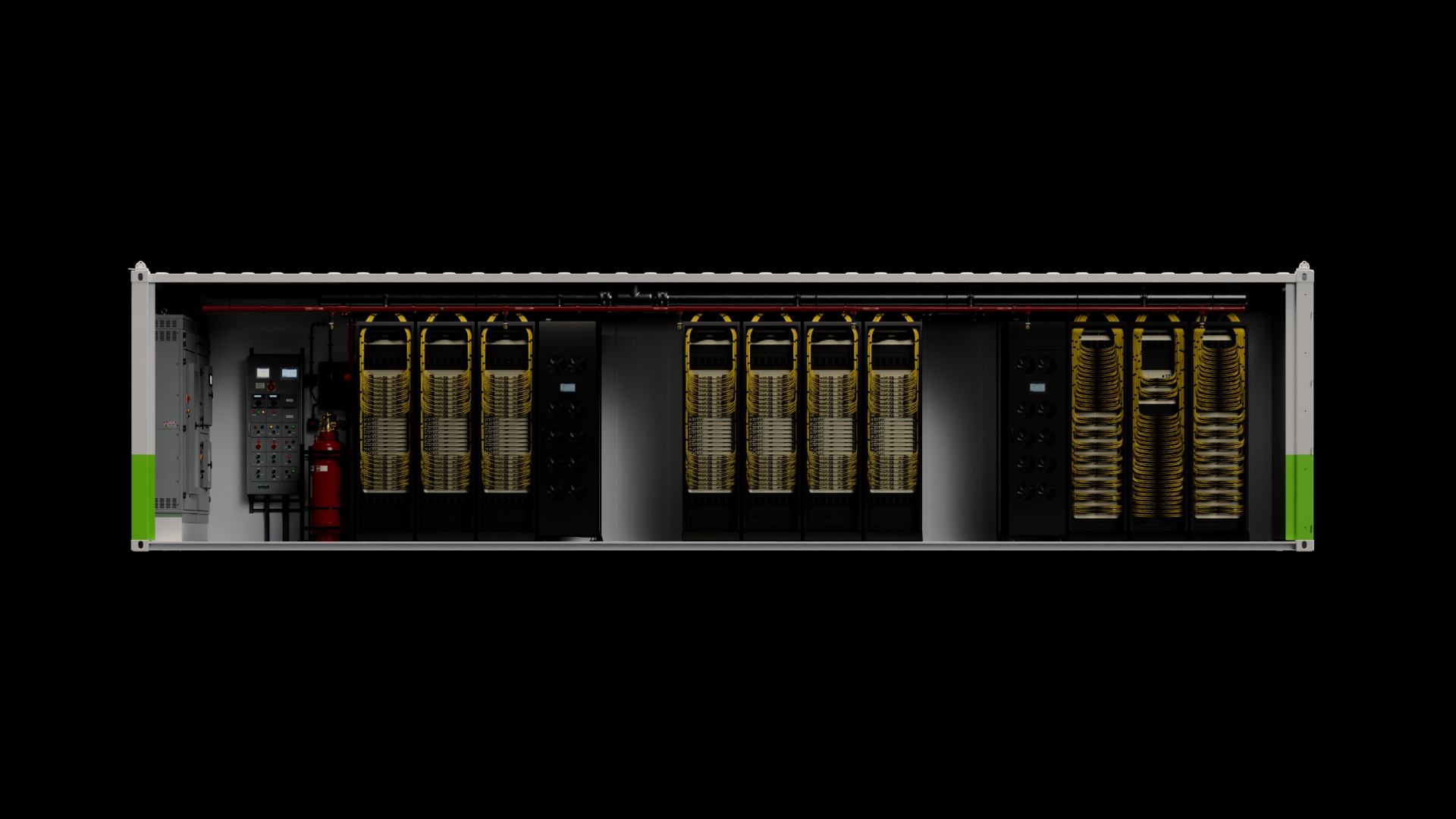
NVIDIA on October 21, 2026 introduced DSX POD at GTC Berlin, a reference design for complete Vera Rubin AI factories that partners assemble inside modular containers and validate before delivery. According to NVIDIA's press release, the units arrive ready to plug into a prepared site's power, cooling and networking, "reducing deployment time from six months to as little as 14 days." Seventeen partners, including Dell, HPE, Lenovo, Foxconn and Vertiv, plan deliveries in early 2027.
Strategically, the launch marks a shift in where NVIDIA sees the bottleneck. For two years the scarce input in AI infrastructure was the GPU. NVIDIA is now selling a faster path to working capacity, on the theory that every idle month between delivery and first output costs an operator revenue. The pitch is explicitly financial, and it gives NVIDIA a stake in the construction schedule, not just the bill of materials.
What "as little as 14 days" actually covers
The headline figure carries an important qualifier. The 14-day window applies only at a site that is already prepared, and NVIDIA's DSX POD product page states plainly that the design does not eliminate onsite work. Customers still need connections to power, facility water, cooling and networking before a container arrives. The months spent securing grid capacity and permits sit outside the clock NVIDIA is advertising.
What moves into the factory is the fiddly integration work. Compute, networking, cabling, rack-level power and liquid cooling are installed at the manufacturing facility, and partners complete rack-to-rack cabling, piping and functional validation before shipment, the company says. A technical blog post by Premal Savla, NVIDIA's senior director of product management, adds that partners flush and pressure-test the liquid-cooling loop at the factory, including manifolds and leak detection, before it is hooked to the site's heat-rejection system. Power enters through a standard 800 VDC input at the container boundary, with upstream power engineered per site.
"An AI factory creates value when it starts producing tokens — not when construction is complete," Jensen Huang, NVIDIA's founder and chief executive, said in the release. He framed the product as "bringing factory-built precision and speed to AI infrastructure construction."
Seventeen partners, one NVIDIA blueprint
NVIDIA is not manufacturing or shipping the pods itself. Under the division of labour described on the product page, NVIDIA develops, tests and validates the cluster-system design, while partners engineer, manufacture, customise, deliver and support the finished units. Quartz reported that partners including Dell, HPE and Foxconn will build the Vera Rubin units, "with deliveries expected to start in early 2027."
The full roster mixes server makers, power and cooling specialists and neocloud operators: Anduril, Armada, Bull, Crusoe, DayOne, Dell Technologies, Delta, Eaton, Foxconn (Ingrasys), GIGABYTE, HPE, Lenovo, Pegatron, Quanta Cloud Technology, Schneider Electric, Vertiv and Wistron. The presence of defence contractor Anduril and edge-computing firm Armada hints at deployments well beyond hyperscale campuses.
NVIDIA says the initial target is large greenfield, liquid-cooled builds, including its NVIDIA Cloud Partners. The design is paired with DSX MaxLPS software for policy-driven power control and telemetry within fixed power limits.
An old idea, rebranded for Rubin
Even NVIDIA's own engineers concede that containerised infrastructure is not new. "Modular and prefabricated data centers already exist," Savla writes. The blog positions DSX POD as expanding that market rather than replacing it, and says containers are not mandatory for every AI factory; the product page likewise notes that conventional construction remains relevant.
That candour cuts both ways. NVIDIA has not published a head-to-head comparison with existing prefabricated offerings, and the six-month baseline is its own figure, not an independently audited one. The real differentiator appears to be validation: a design NVIDIA has tested end to end, extending a lineage the company traces from chips to rack-scale systems to DGX SuperPOD reference architectures. For buyers, that reduces integration risk. For NVIDIA, it deepens control over the stack at the very moment rivals are trying to pry components loose.
Berlin as the venue, paired with a release headline about accelerating Europe's infrastructure, suggests NVIDIA is courting European operators building sovereign AI capacity, where construction timelines and grid access are acute constraints.
The first test arrives in early 2027, when partner units start shipping. The figure to watch is whether early customers actually reach production in weeks rather than months, and how many of them are European operators with sites already wired for the 800 VDC power and liquid cooling the design demands.
Tags
Sources
Enjoyed this article?
Get the top AI stories delivered to your inbox every week. No spam, just the news that matters.
Join our weekly newsletter. Unsubscribe anytime.