
AI visuals draw boos at Bayreuth's Wagner Ring premiere
Bayreuth’s 150th-anniversary Ring cycle used AI-generated projections that provoked boos after a Götterdämmerung performance; critics say the visuals lacked coherent direction.
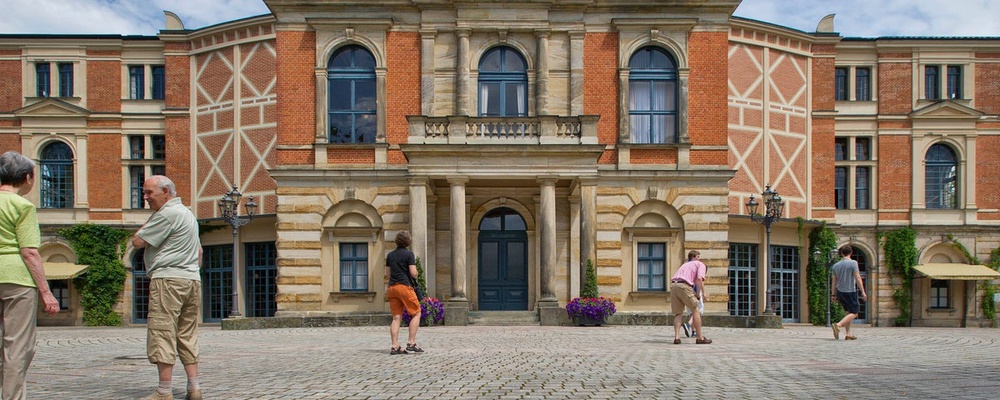
The Bayreuth Festival’s 150th-anniversary production of Richard Wagner’s Ring cycle used artificial intelligence for the first time on stage and met audible disapproval from the crowd after a Saturday evening performance of Götterdämmerung, with spectators booing and whistling, the Associated Press reported on Aug. 2, 2026.
The festival and the production team framed the AI as a visual instrument rather than a performer: Bayreuth’s program states that “Artificial Intelligence will take part on stage—not as a character, but as an image-generating force,” and curator Marcus Lobbes described the staging as layering “image layers partly generated in real-time, creating holographic 3-D spaces.”
What the festival put on stage
Bayreuth says the visuals are meant to surround the singers “as the fixed point within a visually seething cosmos of light, texture, history, and association,” using archival material from previous Ring productions and historical sources to train the system from 1876 to 2024, according to reporting by Deutsche Welle. Festival organizers and Lobbes emphasize that the music and the singers remain central; the AI supplies shifting projections and composite images rather than replacing performers.
The program and press accounts note some striking image choices in the projection feed: reportage lists include archival footage and symbolic imagery cited by audience members and critics — former Chancellor Helmut Kohl, a post-9/11 World Trade Center image, and a stamp from German reunification — which contributed to confusion among some attendees.
How critics and audiences reacted
Immediate crowd response after the Götterdämmerung performance was negative, with boos and whistles reported by the AP. German-language reviews were harsher in tone: one critic called the AI element a “strepitous failure,” while others described “irritation” and “many and loud boos,” and several outlets suggested the visuals lacked a clear directorial concept, risking what Focus called an “undefined colour soup.”
Musicologist Anno Mungen offered a broader critique of the festival’s programming choices in Deutsche Welle’s coverage, arguing that some anniversary programming decisions — separate from the AI question — felt “historically tone-deaf,” a view that ties the production’s reception to Bayreuth’s wider curatorial politics this season.
At the same time, defenders of the staging stress experimentation on a milestone year. Bayreuth and Lobbes frame the project as a one-off anniversary exploration intended to expand the festival’s visual language rather than to overhaul Wagner performance practice.
Why Bayreuth tried AI now — and what it risks
The AI experiment arrives as Bayreuth marks its 150th season, a strategic moment many festivals treat as licence for ambitious, visible departures from tradition. That context explains why organizers risked a high-profile gambit: anniversaries attract global attention and critical scrutiny, and AI visuals promised a headline-grabbing statement.
But the haste of experimentation on a canonical, four-opera cycle that spans roughly 14 hours of music left little room for audience acclimation. Critics point out that Bayreuth’s novelty is structural rather than technical: unlike productions elsewhere that integrate projections within an established directorial concept, this staging foregrounds the image layer itself, which some reviewers say exposes weaknesses in dramaturgy and narrative cohesion.
Closing paragraph — what to watch next Bayreuth’s next Ring performances and the festival’s official post-run statements will be the test: will organizers refine the visual program or retreat from AI in future seasons? The festival’s handling of subsequent audience feedback and whether other leading houses adopt similar archival-AI approaches will determine if this episode is an isolated provocation or the start of a contested trend in opera staging.
Tags
Sources
Enjoyed this article?
Get the top AI stories delivered to your inbox every week. No spam, just the news that matters.
Join our weekly newsletter. Unsubscribe anytime.