Kioxia Becomes Top Stock of 2025 Amid AI Memory Demand
Kioxia's stock soars 540% in 2025 due to AI memory demand, leading global markets and highlighting the surge in NAND flash memory needs.

AI Memory Surge Catapults Kioxia to World's Top-Performing Stock in 2025
Kioxia Holdings Corp., the Japanese NAND flash memory specialist, has emerged as the world's best-performing stock in 2025, with shares skyrocketing approximately 540% year-to-date. This meteoric rise, fueled by explosive demand for AI data storage solutions amid a global NAND supply crunch, has propelled the company—valued at around ¥5.7 trillion (US$36.6 billion)—ahead of all members in the MSCI World Index and to the top of Japan's TOPIX. Debuting on the Tokyo Stock Exchange in December 2024, Kioxia's performance underscores the unrelenting AI infrastructure boom, with major clients like Apple and Microsoft ramping up orders for hyperscale data centers.

Image: Kioxia corporate logo overlaid on a 2025 stock performance chart showing 540% YTD gains, highlighting AI-driven NAND demand peaks.
Company Background and AI Pivot
Kioxia, formerly a key division of Toshiba before its spin-off in 2018, specializes in NAND flash memory—the high-capacity storage technology critical for AI training, inference, and massive data center operations. The company's BiCS8 technology, an advanced 3D NAND platform, has been pivotal in meeting the needs of AI servers, enabling denser storage at lower costs.
What began as a niche memory maker has transformed into an AI powerhouse. In Q3 2025, Kioxia reported 33.1% quarter-over-quarter revenue growth, directly attributed to surging AI server deployments. Hyperscalers' rush to expand AI infrastructure has created an "insatiable appetite" for memory chips, with analysts noting that AI models require exponentially more storage for processing vast datasets. Kioxia's client roster, including tech giants building out next-generation data centers, has positioned it perfectly amid this shift. Stable inflation data and optimistic investor sentiment—reflected in rising fear and greed index levels—further amplified the stock's momentum throughout the year.

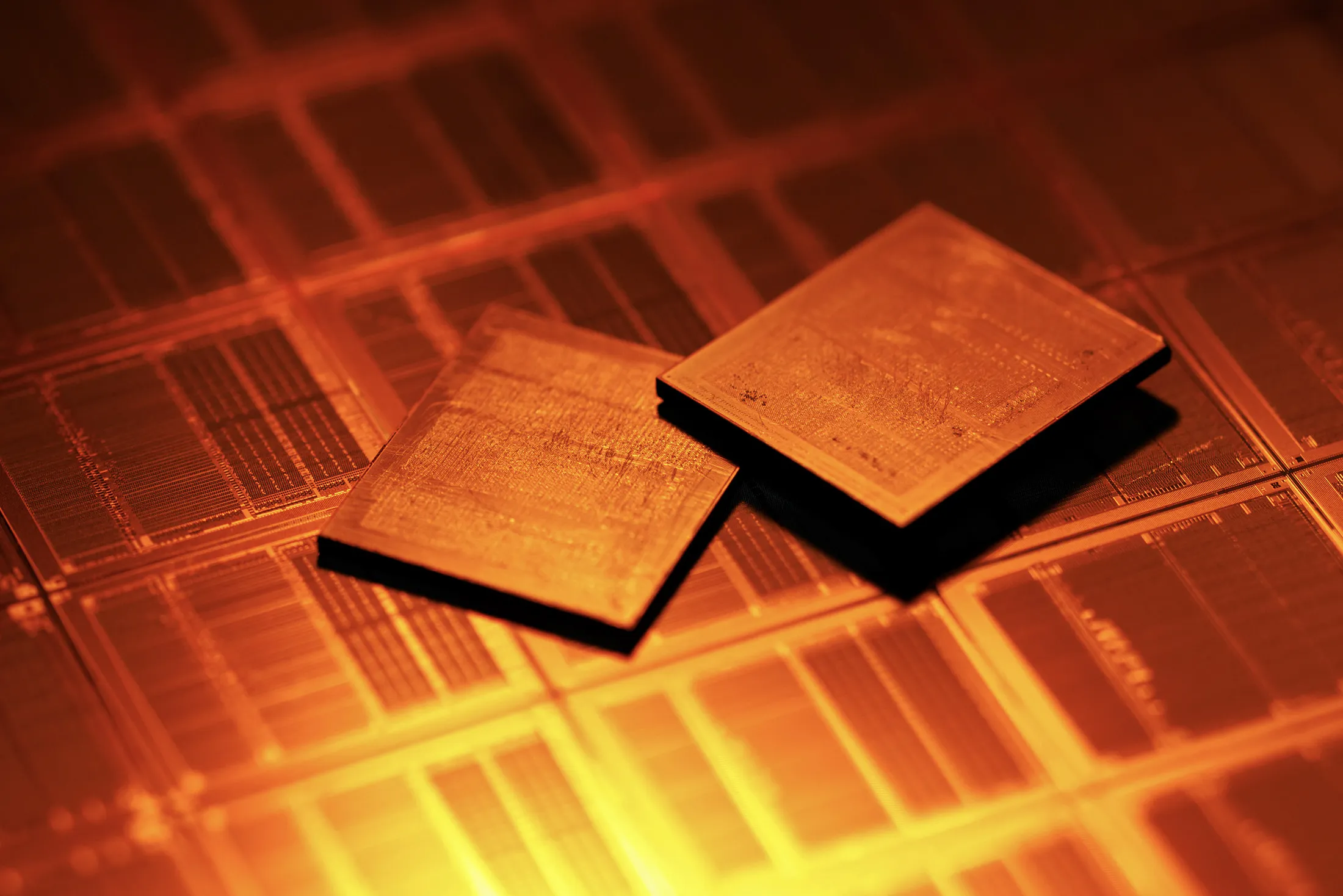
Image: Close-up of Kioxia's BiCS8 3D NAND flash memory die, showcasing the layered architecture essential for high-density AI storage solutions.
Financial Surge and Market Outperformance
Kioxia's 540% stock gain in 2025 dwarfs major benchmarks, outpacing the MSCI World Index and TOPIX by wide margins. Trading under ticker TYO:285A (OTC: $KXHCF), the shares hit peaks driven by expectations of rising NAND prices due to persistent supply constraints. Investors poured in, betting on Kioxia's direct exposure to the AI memory rush, with strategists like Amir Anvarzadeh of Asymmetric Advisors highlighting memory as a key theme for 2026 tech investments.
Key financial highlights include:
- Trailing P/E ratio: 36.17, signaling premium valuation on past earnings.
- Forward P/E ratio: 9.68, suggesting more tempered growth expectations.
- Current P/E: 17.85–19.64 as of late December 2025, below peaks but above the semiconductor industry average of 19.9x.
- Market cap: Approximately ¥5.7 trillion, underscoring its rapid ascent from IPO.
This performance aligns with broader semiconductor optimism, including Japan's plans to quadruple its AI and semiconductor budget to ¥1.23 trillion by 2026. However, volatility struck in recent months: shares plunged 23% in a single day after Q3 earnings missed lofty AI growth forecasts, exposing profit pressures from oversupply risks and Chinese competition.

Image: Aerial view of Kioxia's Yokohama headquarters, a hub for NAND innovation amid the 2025 AI boom.
Challenges Amid the Boom: Valuation Concerns and Competition
Despite the triumph, analysts question the rally's sustainability. A 58% overvaluation per discounted cash flow (DCF) models raises red flags, with contradictory P/E metrics painting a "tale of two valuations." Margin squeezes from volatile NAND pricing and intensifying rivalry—particularly from Chinese firms—could erode gains if AI hype cools.
Kioxia's Q3 profit dipped despite revenue jumps, as AI-driven demand failed to fully offset broader market dynamics. A recent 23% single-day drop post-earnings highlighted investor sensitivity to any shortfall in hyperscaler orders. Supply tightness persists, but warnings of a potential data center investment slowdown loom, though experts like Anvarzadeh argue memory undersupply will buffer prices into 2026.
Broader context includes ripple effects: chip wafer suppliers like Sumco Corp are poised for gains, while peers such as Micron Technology ride similar AI data center waves. Geopolitical factors, like U.S. delays on Chinese chip tariffs, indirectly aid Japanese players like Kioxia.
Industry Impact and 2026 Outlook
Kioxia's ascent signals the AI boom's vitality, even as markets jitter over valuations. NAND demand is projected to surge, with prices expected to climb as AI infrastructure scales—essential for training models like those powering generative AI. Tech billionaires' wealth has ballooned by $500 billion amid this frenzy, while mergers like NVIDIA's $2 billion bid for Groq underscore consolidation.
For 2026, Kioxia appears resilient. "Worries about a data center slowdown shouldn’t affect memory prices next term, as the market is heavily undersupplied," Anvarzadeh noted. With Apple and Microsoft expanding orders, and Japan's semiconductor push, Kioxia could sustain momentum—provided it navigates competition and delivers on BiCS advancements.
This story exemplifies how AI's foundational needs—reliable, high-volume storage—are reshaping global markets, rewarding agile innovators like Kioxia while testing speculative fervor.
Tags
Enjoyed this article?
Get the top AI stories delivered to your inbox every week. No spam, just the news that matters.
Join our weekly newsletter. Unsubscribe anytime.