
LG Unveils CLOiD Home Robot at CES 2026
LG unveils CLOiD, a humanoid robot for household chores, at CES 2026, aiming for a "Zero Labor Home" with AI-driven capabilities.
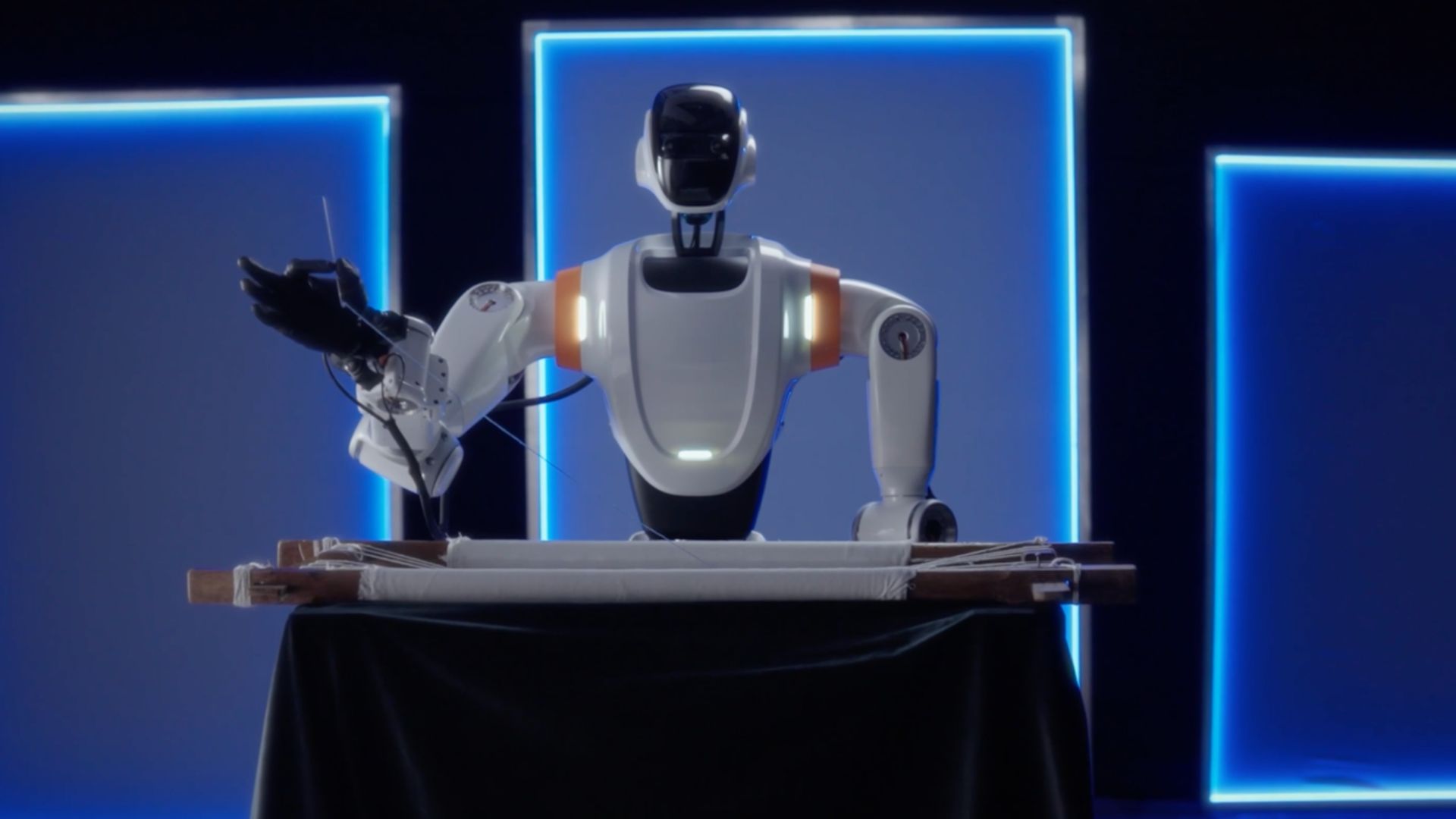
LG Unveils CLOiD: The Humanoid Home Robot Set to Transform Household Chores at CES 2026
LG Electronics announced its ambitious entry into the home robotics market with LG CLOiD, a humanoid robot designed to handle everyday chores and usher in the era of the "Zero Labor Home." The South Korean tech giant released a teaser video on December 25, 2025, across global social media platforms, previewing the robot's capabilities ahead of its full unveiling at CES 2026 in Las Vegas, starting January 6.
Key Features and Capabilities of LG CLOiD
The teaser footage captures CLOiD in action: grasping household objects with precision, exchanging fist bumps with humans—including children—and navigating living spaces seamlessly. Standing as a humanoid form factor, the robot integrates two arms and five individually actuated fingers, enabling delicate movements suited to human-designed environments, such as folding laundry or handling fragile items.
AI-Driven Intelligence forms the core of CLOiD's functionality. Equipped with a head unit housing a powerful chipset, display, speaker, camera, and sensors, it autonomously recognizes surroundings, learns residents' schedules and lifestyles, and acts as a central AI assistant. This allows CLOiD to coordinate smart home appliances—dimming lights, activating air purifiers, or adjusting settings as users prepare to leave—creating a proactive, personalized ecosystem.
The name CLOiD merges LG's established CLOi robot brand with "D" for "Dynamic," emphasizing its vitality and responsiveness. Unlike simpler devices like robotic vacuums or Amazon's Astro, CLOiD's dexterity and interaction set it apart, drawing from LG's prior collaborations, such as with the Korea Institute of Science and Technology on advanced actuators and visual language models.
LG's Strategic Push into Robotics
LG's development of CLOiD reflects a broader commitment to robotics as a core growth engine. Earlier in 2025, the company established the HS Robotics Research Institute under its Home Solution (HS) Business Division, consolidating scattered expertise to accelerate innovation. This move builds on LG's history with service robots, like airport guides and hotel assistants, now pivoting to intimate home settings.
Executive Vice President Baek Seungtae (also spelled Baik Seung-tae in some reports), head of the HS Business Division, emphasized the vision: “At CES 2026, we will showcase not only the home robot LG CLOiD but also LG Electronics’ efforts toward realizing the ‘Zero Labor Home’ vision.” This concept envisions technology liberating people from mundane tasks, freeing time for meaningful activities.
Future potential includes modular upgrades, such as cooking attachments or enhanced mobility, to extend usability and minimize waste. The robot's design supports integration into LG's ecosystem of AI-powered appliances, positioning it as a hub for the connected home.
Industry Context and Competitive Landscape
LG's CLOiD arrives amid a surge in humanoid robotics for domestic use, fueled by AI and mechanical advances. Social media buzz on platforms like X (formerly Twitter) highlights growing excitement, with comparisons to rivals like Tesla's Optimus or Figure's home assistants. While competitors focus on industrial or basic tasks, CLOiD targets fine-motor household chores, potentially setting benchmarks in dexterity.
CES 2026, the world's largest consumer tech show, provides the perfect stage, where LG plans to demonstrate live interactions and ecosystem synergies. Analysts note this as LG's "full-fledged entry" into home robots, contrasting with appliance-centric strategies.
Implications for Consumers and the Smart Home Future
CLOiD could redefine daily life, turning homes into effortless environments where robots handle "bring me the remote" requests or table clearing. For busy households, this means reduced drudgery—statistics from industry reports suggest global households spend over 10 hours weekly on chores, a burden CLOiD aims to eliminate. Personalized care features, like adapting to family routines, add emotional value, fostering companionship alongside utility.
Challenges remain: ensuring safety in human spaces, affordability, and ethical AI use. LG's focus on modularity addresses longevity, but real-world testing at CES will be crucial. As robotics matures, CLOiD signals a shift from passive appliances to active partners, potentially accelerating the $50 billion+ smart home market by blending automation with empathy.
Broader impacts include workforce shifts in domestic services and sustainability gains from efficient energy management. LG's "Zero Labor Home" isn't just hype—it's a blueprint for tech-human harmony, with CLOiD as the pioneer. As CES approaches, eyes turn to Las Vegas for demos that could propel LG ahead in the robotics race.
Tags
Enjoyed this article?
Get the top AI stories delivered to your inbox every week. No spam, just the news that matters.
Join our weekly newsletter. Unsubscribe anytime.