US Faces Strategic Risk from China's Battery Dominance
US military and AI firms face risks from reliance on China's battery production, prompting strategic shifts and investments in domestic supply chains.

The Pentagon and AI Giants Face Critical Vulnerability: Overreliance on China's Battery Dominance
The United States military and leading AI companies share a stark strategic weakness: heavy dependence on China's batteries, essential for everything from drones and missiles to massive data centers powering artificial intelligence. This vulnerability, highlighted in a recent New York Times investigation, exposes national security risks amid escalating U.S.-China tensions, as both sectors scramble to secure alternative supplies.
Background on the Battery Bottleneck
China controls approximately 80-90% of global battery production capacity, particularly for lithium-ion batteries critical to electric vehicles, renewable energy storage, and high-performance computing. The Pentagon relies on these batteries for unmanned systems, electric aircraft prototypes, and portable power in field operations, while AI giants like those behind data-hungry models require vast energy storage to fuel server farms.
A December 2025 New York Times report detailed how U.S. defense contractors and tech firms import millions of battery cells annually from Chinese manufacturers such as CATL and BYD, despite tariffs and export controls. This dominance stems from China's grip on upstream materials like lithium, cobalt, and graphite refining—over 70% worldwide—making diversification challenging. The issue gained urgency after U.S. export restrictions on advanced chips to China prompted retaliatory limits on rare earths and battery components.

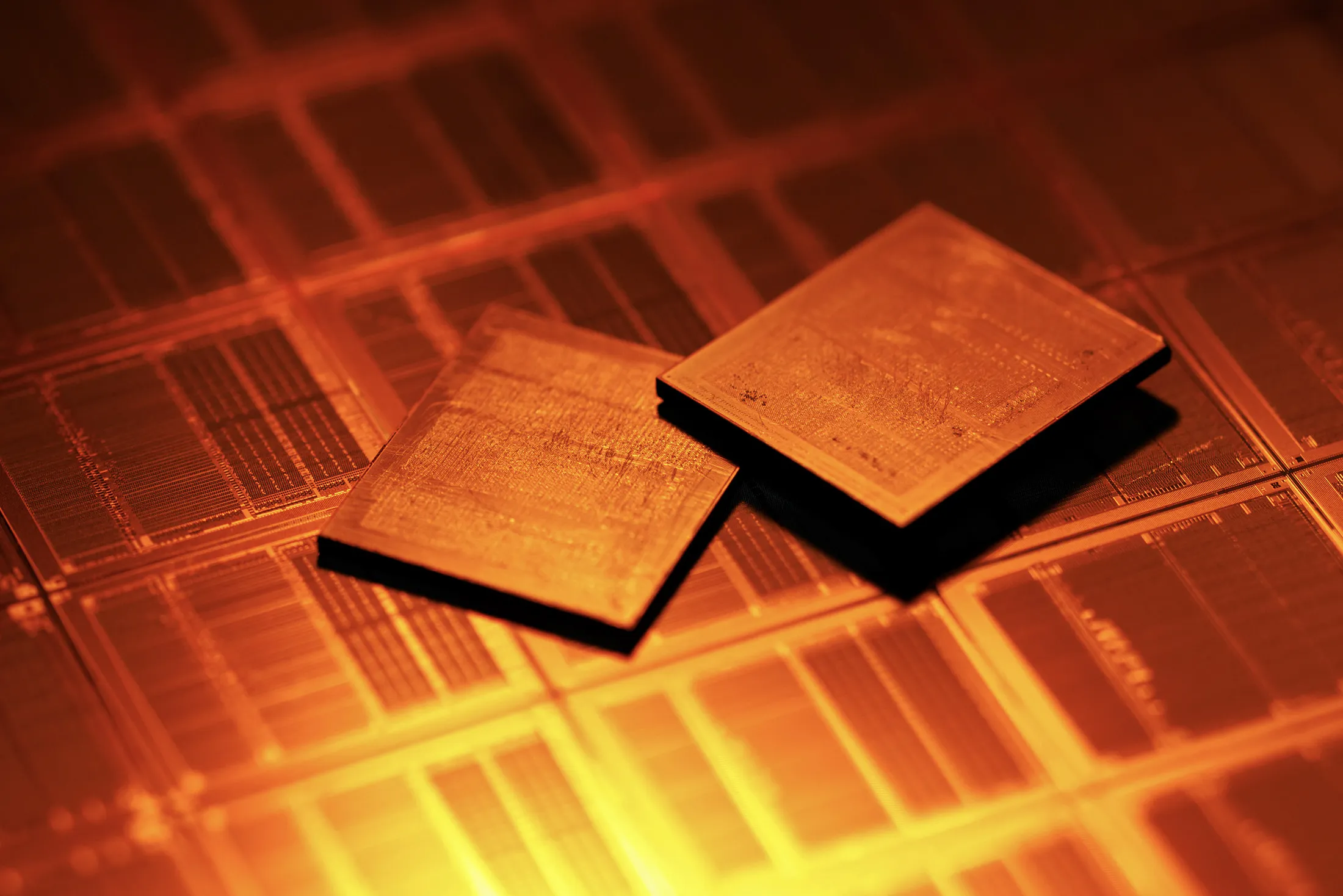
Image: Conceptual representation of Pentagon operations intersecting with AI data centers, highlighting battery dependency. (Sourced from defense tech visualizations)
Pentagon's Push for Supply Chain Independence
The U.S. Department of Defense is aggressively addressing this gap through multi-billion-dollar investments. In a landmark December 2025 deal, the Pentagon committed $7.4 billion for a 40% stake in a new mineral smelting facility in Tennessee, partnering with Korea Zinc. This venture targets 13 critical minerals, including those vital for batteries, semiconductors, and AI hardware, ensuring U.S. priority access to global output.
This follows earlier moves, such as Korea Zinc's August memorandum with Lockheed Martin for a "China-free" supply chain of germanium, used in defense optics and AI sensors. South Korea's industry minister endorsed the Tennessee project as a "positive strategic move" to bolster resilient chains despite costs. The Defense Department's 2025 Annual Report to Congress on China's military developments further underscores the threat, noting Beijing's "exceptionally complex" global ambitions and investments in battery tech for its own hypersonic weapons and AI systems.
These efforts align with the CHIPS and Science Act and Defense Production Act invocations, aiming to onshore 10-20% of battery production by 2030. However, experts warn full decoupling could take a decade, given China's pricing edge—its batteries cost 30% less due to subsidies and scale.

Image: Artist's rendering of the proposed Korea Zinc smelting facility in Tennessee, a key Pentagon-backed project for critical minerals.
AI Industry's Parallel Crisis
AI giants like those developing large language models face identical hurdles. Training a single frontier AI model consumes energy equivalent to thousands of households, necessitating gigawatt-scale battery backups for data centers. U.S. firms, including hyperscalers, source over 60% of batteries from China, per industry analyses, complicating green energy transitions and expansion plans.
Times of India reported in December 2025 that American tech companies share the Pentagon's "Chinese battery problem," with supply disruptions risking AI deployment delays. For instance, NVIDIA-powered GPU clusters and Tesla's Dojo supercomputers depend on high-density cells where China leads. Diversification bids include partnerships with LG Energy Solution (South Korea) and U.S. startups like QuantumScape, but production lags far behind demand—global battery needs projected to quadruple by 2030.
U.S. Government and Industry Responses
Washington's response spans legislation and incentives:
- Inflation Reduction Act tax credits worth $7,500 per EV battery pack, prioritizing North American sourcing.
- $3 billion in DOE grants for domestic gigafactories, including Albemarle's lithium expansions.
- Bans on Chinese batteries in federal procurement, effective 2027.
Private sector moves include Apple and Google scouting Vietnamese and Indian suppliers, while Panasonic ramps U.S. output. Yet, a RAND Corporation study cited in recent analyses estimates China retains 65% market share through 2028, pressuring prices and innovation.

Image: Interior of a Chinese lithium-ion battery manufacturing facility, illustrating the scale of production dominance.
Industry Impact and Geopolitical Implications
This dependency amplifies U.S.-China rivalry in the AI arms race and military modernization. The Pentagon views batteries as a "force multiplier" for autonomous swarms and directed-energy weapons, while AI firms see them as enablers of exascale computing. Disruptions could hike costs by 25-40%, per supply chain models, slowing Pentagon readiness and AI scaling.
Broader implications include:
- Economic shifts: Boost for allies like South Korea, Australia (lithium), and Canada (nickel).
- Environmental concerns: Onshoring reduces shipping emissions but demands sustainable mining.
- Security risks: Potential Chinese export curbs, as hinted in 2025 National People's Congress speeches by Premier Li Qiang.
Progress is evident—the U.S. now produces 15% of global EV batteries, up from 5% in 2022—but experts urge accelerated R&D in solid-state and sodium-ion alternatives to erode China's edge. Failure risks ceding ground in the defining tech battles of the decade.
Tags
Enjoyed this article?
Get the top AI stories delivered to your inbox every week. No spam, just the news that matters.
Join our weekly newsletter. Unsubscribe anytime.