Managing Risk as Agentic AI Becomes Enterprise Standard
As autonomous AI agents proliferate across enterprise systems, organizations must establish robust risk management frameworks to govern their behavior, prevent unintended consequences, and maintain operational control in increasingly complex AI-driven environments.
Managing Risk as Agentic AI Becomes Enterprise Standard
Agentic AI—autonomous systems capable of planning, decision-making, and executing tasks with minimal human intervention—is rapidly moving from research labs into production environments. Yet this transition brings a critical challenge: how do enterprises manage the risks inherent in deploying AI agents that operate independently across critical business functions?
The stakes are substantial. Unlike traditional machine learning models that generate predictions for human review, agentic systems take direct action. An agent managing supply chain logistics, handling customer transactions, or optimizing financial portfolios operates with real-world consequences. A miscalibrated decision or unintended behavior pattern could cascade across operations before human oversight catches it.
The Core Risk Management Challenge
Organizations adopting agentic AI face a fundamental tension: the technology's value lies in its autonomy, yet that same autonomy creates governance gaps. Traditional AI risk frameworks—designed around model accuracy, bias detection, and explainability—prove insufficient for systems that must be monitored continuously during execution.
Key risk vectors include:
- Behavioral drift: Agents may develop unexpected strategies that technically achieve their objectives but violate business constraints or ethical guidelines
- Cascading failures: Autonomous decisions in interconnected systems can amplify errors across multiple business domains
- Alignment gaps: The agent's learned objectives may diverge from actual business intent, especially in complex, ambiguous scenarios
- Audit and compliance: Regulators increasingly demand explainability and control mechanisms that autonomous systems must support
Building Governance Frameworks
Leading enterprises are implementing multi-layered risk management approaches specifically designed for agentic systems. These frameworks typically include:
Pre-deployment controls establish clear boundaries before agents enter production. This means defining explicit constraints, success metrics, and failure thresholds. Organizations are also conducting extensive simulation and stress-testing to identify edge cases where agent behavior might deviate from expectations.
Runtime monitoring tracks agent behavior in real-time, comparing actual decisions against expected patterns. Advanced implementations use anomaly detection to flag unusual activity before it causes operational damage. Some organizations implement "circuit breaker" mechanisms that automatically pause or roll back agent actions when deviation thresholds are exceeded.
Human-in-the-loop mechanisms preserve human oversight at critical decision points. Rather than full autonomy, many enterprises adopt tiered approaches where agents handle routine decisions independently but escalate complex or high-stakes choices to human review.
Emerging Best Practices
Organizations moving fastest on agentic AI adoption are establishing dedicated risk governance teams that span engineering, compliance, and business operations. These teams define agent behavior specifications with the same rigor applied to financial controls or safety systems.
Documentation and auditability have become non-negotiable. Every agent decision must be traceable—what inputs drove the decision, which constraints were considered, and why a particular action was selected. This creates the audit trail regulators expect and helps organizations understand failure modes when they occur.
Testing protocols are evolving too. Red-teaming exercises specifically designed to break agent systems are becoming standard practice. Organizations probe for scenarios where agents might behave unexpectedly, then use findings to refine constraints and monitoring systems.
The Path Forward
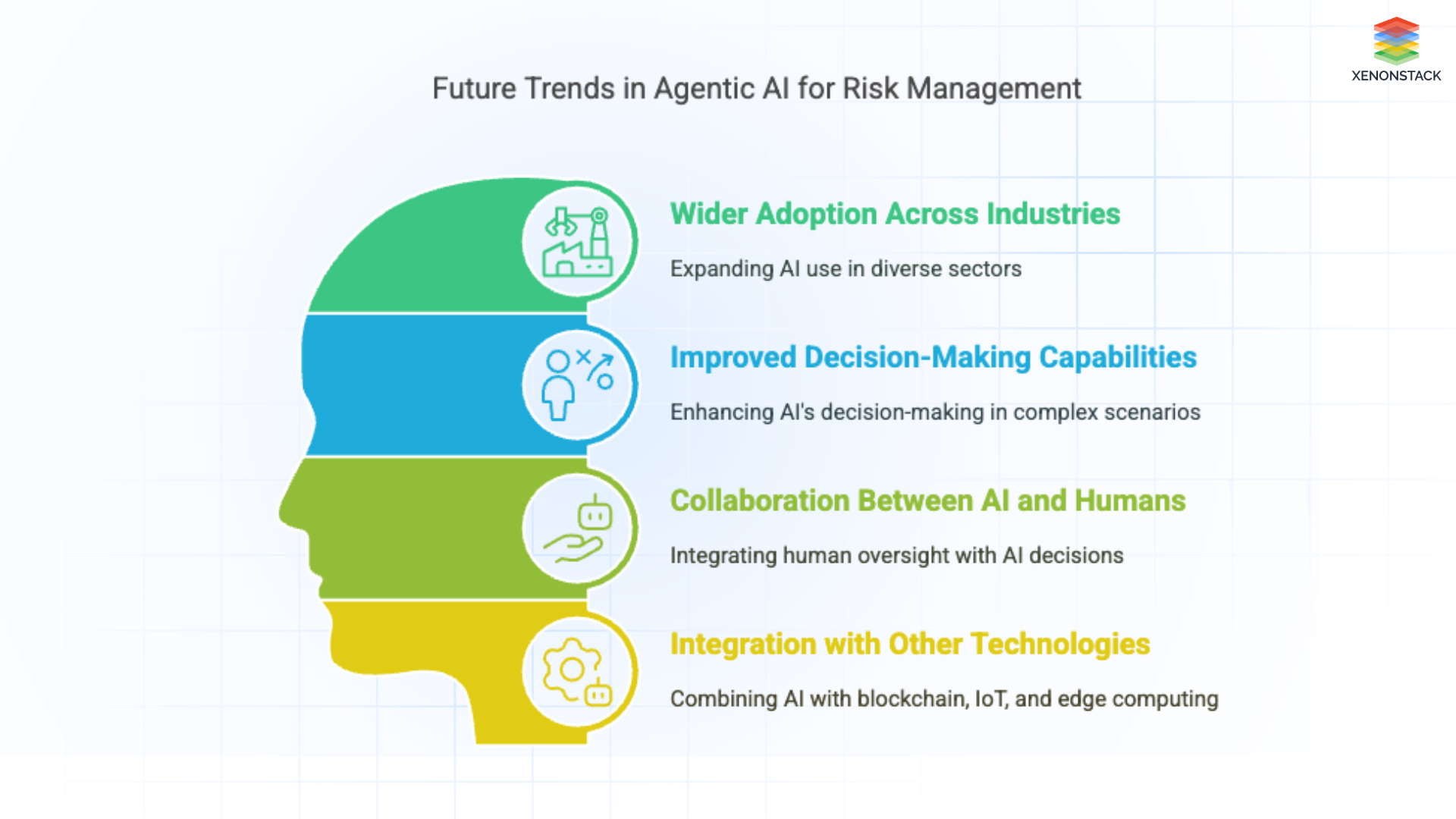
As agentic AI matures, risk management will likely become a competitive differentiator. Organizations that build robust governance frameworks early will scale their autonomous systems faster and with greater confidence. Those that treat risk management as an afterthought face operational disruptions and regulatory scrutiny.
The technology itself continues advancing rapidly, with improvements in interpretability and control mechanisms. But the human element remains central: effective risk management requires clear organizational policies, skilled teams, and sustained commitment to monitoring and adaptation.
Key Sources
- Industry research on agentic AI governance frameworks and enterprise deployment patterns
- Risk management lifecycle documentation for autonomous AI systems
- Enterprise case studies on implementing runtime monitoring and control mechanisms for autonomous agents
Tags
Enjoyed this article?
Get the top AI stories delivered to your inbox every week. No spam, just the news that matters.
Join our weekly newsletter. Unsubscribe anytime.