Sal Khan Warns of AI's Potential to Displace Millions
Sal Khan warns AI could displace millions, reshaping economies. Surveys show mixed worker sentiments on AI's role in the workforce.
AI's Looming Impact on Jobs: Sal Khan Warns of Massive Displacement as Surveys Reveal Worker Fears
Sal Khan, founder of Khan Academy, issued a stark warning in a New York Times opinion piece, predicting that artificial intelligence (AI) will displace workers on a scale far greater than many anticipate, potentially reshaping economies and labor markets worldwide. This comes amid rising layoffs in sectors like marketing, uneven job outlooks, and mixed worker sentiments, with recent surveys showing both optimism and deep pessimism about AI's role in the workforce.
Sal Khan's Dire Prediction and Broader Context
Khan's op-ed highlights AI's rapid advancement as a transformative force, arguing that tools like large language models will automate routine tasks across white-collar jobs, from writing and analysis to customer service. He emphasizes that unlike past technological shifts, AI's generality could affect 80-90% of jobs to some degree, urging proactive education and reskilling to mitigate fallout. This view aligns with reports of immediate pressures: a Wall Street Journal survey found marketers facing layoffs as companies chase AI-driven cost savings, while CNN notes AI hiring tools are frustrating job seekers and employers alike.
Business Insider dubbed AI-related job loss the "scariest word" for workers from Washington, D.C., to Silicon Valley, capturing a pervasive anxiety. Contrasting this, Fortune reported that occupations most exposed to AI automation—such as data entry and basic programming—have actually outperformed the broader job market, with lower unemployment rates, suggesting short-term resilience or adaptation.
Worker Fears and Hopes: Insights from Recent Surveys
A Federal Reserve Bank of Boston survey conducted in late 2024 and analyzed in 2025 reveals nuanced worker attitudes. While only 5% of U.S. household heads expressed immediate worry about AI-driven job loss—comparable to general unemployment fears in the Monthly Survey of Consumers (MSC)—pessimism about financial well-being over the next five years reached 21%, nearly matching broader economic gloom.
Industries with highest worry include administration (21%), arts and entertainment (18%), information (18%), real estate (16%), and finance and insurance (15%). Worry correlates with firms planning AI adoption, per the Business Trends and Outlook Survey (BTOS). Despite this, many workers anticipate opportunities: the Boston Fed notes optimism in roles involving creativity or oversight, where AI augments rather than replaces humans.
Industry Shifts and Uneven Job Outlook
AI's workplace integration is accelerating, but impacts vary. A Manila Times analysis from December 2025 describes how AI reshapes tasks—automating coding, content creation, and diagnostics—yet job growth persists in AI oversight, ethics, and hybrid roles. McKinsey's 2025 report on "superagency in the workplace" predicts AI will empower workers by handling mundane tasks, potentially boosting productivity by 30-40% in knowledge work, but warns of displacement in routine-heavy fields.
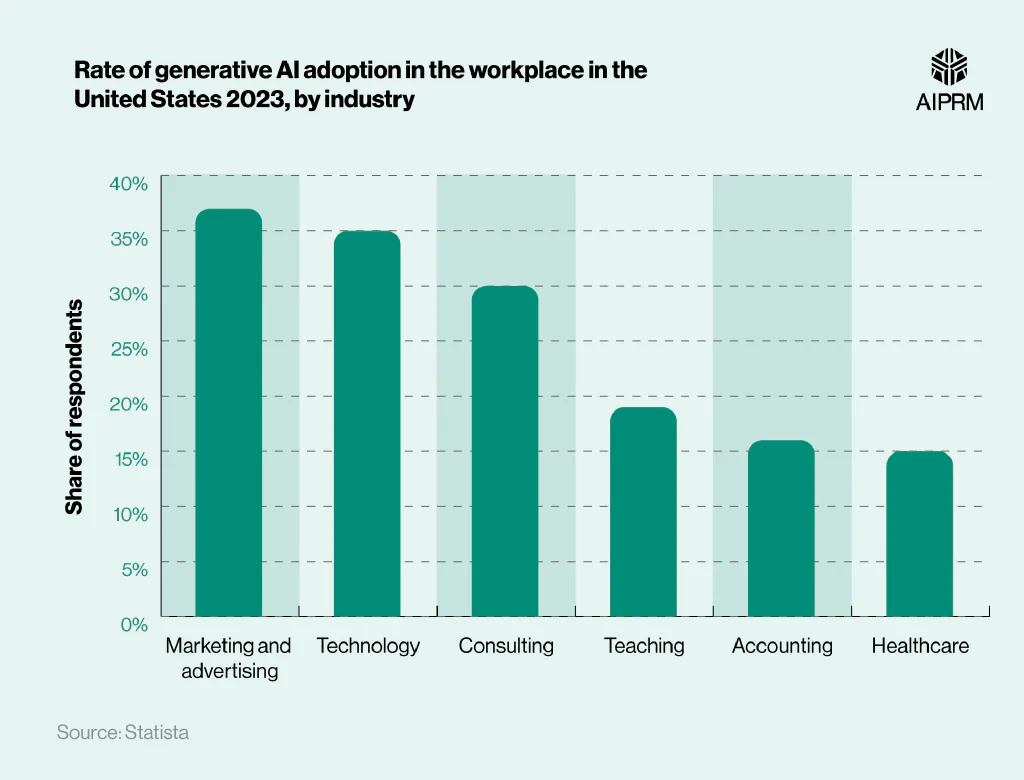
Marketing exemplifies the tension: WSJ reports executives pushing for AI to cut headcounts, with surveys showing 60% of firms planning reductions. Conversely, high-exposure jobs show strength—Fortune cites U.S. Bureau of Labor Statistics data where AI-vulnerable roles had unemployment below the national average in 2025.
Implications for Policy, Education, and the Economy
Khan advocates for universal AI literacy via free platforms like Khan Academy's tools, which teach prompt engineering and critical AI use. This resonates with Boston Fed findings: educated workers in tech-savvy industries express less fear, viewing AI as a collaborator.
Policymakers face challenges. With AI adoption tied to industry BTOS forecasts, governments must scale reskilling—potentially via subsidies or public-private partnerships—to avoid inequality spikes. McKinsey urges "human-AI symbiosis," where workers leverage AI for innovation, forecasting net job creation in advanced economies by 2030 if managed well.
Yet risks loom: uneven adoption could widen gaps between AI adopters and laggards, per Manila Times, with developing regions lagging in infrastructure. Globally, IMF estimates 40% of jobs exposed to AI, urging safety nets like universal basic income pilots.
Looking Ahead: Balancing Disruption and Opportunity
As 2025 closes, AI's labor impact blends alarm with potential. Khan's warning spotlights the scale—potentially tens of millions displaced—while data tempers immediacy: low short-term fears but high long-term anxiety signal preparation needs. Industries adapting fastest, like tech and finance, lead job creation, but vulnerable sectors demand intervention.
Ultimately, outcomes hinge on strategy. Surveys affirm workers' readiness to adapt if equipped, positioning AI not as job-killer but evolution driver. Stakeholders—from CEOs to educators—must prioritize upskilling to harness gains while cushioning losses, ensuring broad prosperity amid transformation.
Tags
Sources
Enjoyed this article?
Get the top AI stories delivered to your inbox every week. No spam, just the news that matters.
Join our weekly newsletter. Unsubscribe anytime.