
Yuan 3: Enterprise-Grade Multimodal AI Powers New Wave of Business Intelligence
Yuan 3 represents a significant leap in multimodal LLM technology, combining text and visual processing capabilities designed specifically for enterprise workflows. This technical analysis explores its architecture, key features, and real-world applications transforming business intelligence.
The Multimodal AI Arms Race Heats Up
The enterprise AI landscape is witnessing an intense competition for multimodal dominance. While OpenAI, Google, and other tech giants dominate headlines, a new contender is quietly reshaping how organizations process complex, mixed-media data. Yuan 3 emerges as a purpose-built multimodal large language model engineered specifically for enterprise applications—not consumer-facing chatbots or general-purpose assistants.
This distinction matters. Enterprise deployments demand reliability, interpretability, and seamless integration with existing workflows. Yuan 3 addresses these requirements head-on, combining advanced language understanding with sophisticated visual processing capabilities.
Architecture and Technical Foundation
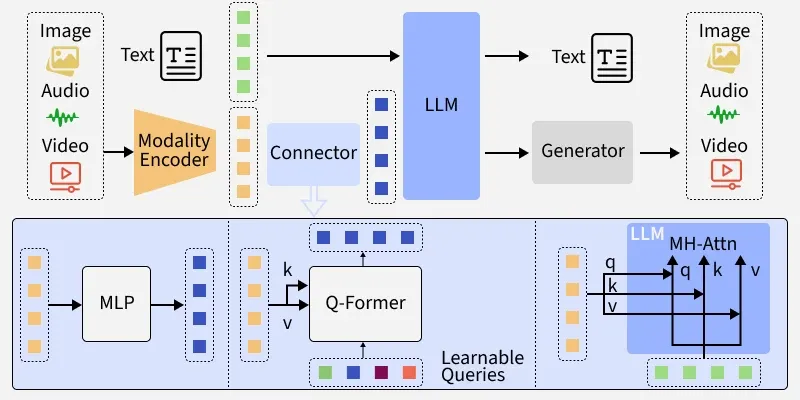
Yuan 3 builds upon proven multimodal principles while introducing enterprise-specific optimizations. The model integrates text and image processing through a unified architecture, enabling simultaneous analysis of documents, charts, diagrams, and written content—a critical capability for business intelligence, financial analysis, and technical documentation review.
According to the technical specifications available on GitHub, the model demonstrates:
- Dual-modality processing: Seamless handling of text and visual inputs without separate pipelines
- Enterprise-scale efficiency: Optimized inference speeds suitable for high-volume document processing
- Fine-tuning capabilities: Customization options for industry-specific vocabularies and workflows
- Reinforcement learning integration: Advanced training methodologies that improve performance through feedback loops
Real-World Enterprise Applications
The practical implications extend across multiple sectors. Financial institutions can deploy Yuan 3 for simultaneous analysis of quarterly reports, charts, and regulatory filings. Legal firms benefit from document review capabilities that understand both textual nuance and visual evidence. Manufacturing operations leverage the model for technical documentation analysis combined with equipment imagery.
Research into multimodal LLM architectures demonstrates that integrated visual-linguistic understanding significantly improves accuracy in complex reasoning tasks—precisely the scenarios enterprises encounter daily.
Competitive Positioning
Yuan 3 enters a market where open-source alternatives like Open-MOSS have already proven the viability of community-driven multimodal development. However, Yuan 3's enterprise focus differentiates it from general-purpose models. The emphasis on reliability, customization, and integration with business systems addresses gaps that consumer-oriented models leave unresolved.
Technical analysis from industry observers highlights Yuan 3's particular strength in handling domain-specific terminology and maintaining consistency across large-scale deployments—critical factors for enterprise adoption.
Key Advantages for Organizations
Integration flexibility: Yuan 3 supports multiple deployment scenarios, from cloud infrastructure to on-premises installations, accommodating organizations with varying security and compliance requirements.
Cost efficiency: By consolidating text and image processing into a single model, enterprises reduce infrastructure complexity and operational overhead compared to maintaining separate specialized systems.
Customization depth: The model's architecture allows fine-tuning on proprietary datasets, enabling organizations to build competitive advantages through domain-specific optimization.
Looking Forward
The emergence of enterprise-focused multimodal models like Yuan 3 signals a maturation in AI deployment. Rather than chasing consumer headlines, this generation of models addresses the unglamorous but essential work of business automation, document intelligence, and decision support.
Organizations evaluating multimodal solutions should assess Yuan 3 alongside established players, paying particular attention to integration requirements, customization capabilities, and total cost of ownership. The competitive landscape increasingly rewards models engineered for specific use cases rather than general-purpose versatility.
Tags
Sources
Enjoyed this article?
Get the top AI stories delivered to your inbox every week. No spam, just the news that matters.
Join our weekly newsletter. Unsubscribe anytime.