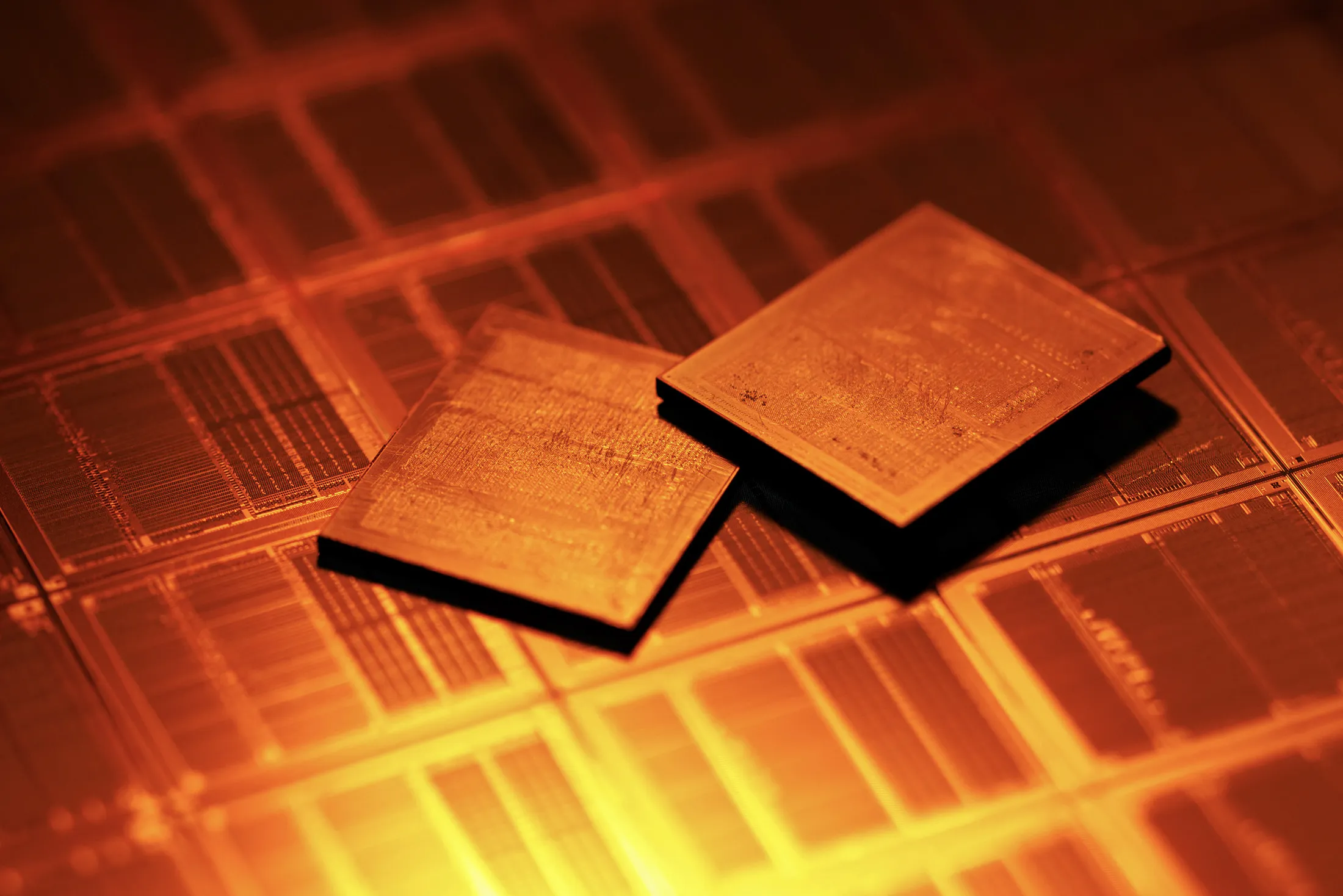
AMD's MI455 Chip Signals Aggressive Push Against Nvidia's AI Dominance
At CES 2026, AMD unveiled its MI455 AI processor alongside a deepened partnership with OpenAI, marking a critical moment in the race for AI chip supremacy. The move challenges Nvidia's market stranglehold while signaling AMD's commitment to enterprise-grade AI infrastructure.

The Competitive Battlefield Heats Up
The AI chip market is no longer a two-horse race—it's becoming a three-way battle for dominance. AMD's announcement of the MI455 at CES 2026 represents a significant escalation in the company's challenge to Nvidia's near-monopoly on high-performance AI accelerators. While Nvidia continues to dominate with its H100 and newer architectures, AMD is leveraging strategic partnerships and architectural innovations to carve out meaningful market share in an industry projected to reach hundreds of billions in annual revenue.
The timing is deliberate. As AMD positions itself for the future of AI, the company faces mounting pressure from both established competitors and emerging challengers. The MI455 isn't just another processor—it's a statement about AMD's technical capabilities and its ability to attract tier-one AI companies as partners.
MI455: Specifications and Architecture
AMD's MI455 announcement at CES 2026 highlighted several key technical differentiators:
- Performance metrics: The chip targets enterprise AI workloads with improved memory bandwidth and compute density compared to previous generations
- Power efficiency: Designed to reduce operational costs for large-scale AI deployments
- Software ecosystem: Continued investment in ROCm and compatibility with major AI frameworks
- Manufacturing: Built on advanced process nodes to maintain competitive performance-per-watt ratios
The MI455 sits within AMD's broader MI500 roadmap, indicating a multi-generational strategy rather than a one-off product launch. This approach mirrors how Nvidia has maintained its lead through consistent architectural evolution and software ecosystem development.
The OpenAI Partnership: What It Means
The collaboration with OpenAI carries symbolic and practical weight. OpenAI's endorsement of AMD hardware signals that the company's chips are production-ready for demanding workloads—a critical validation in an industry where performance claims are routinely scrutinized. For AMD, securing OpenAI as a reference customer provides both credibility and real-world performance data.
However, this partnership should be contextualized within the broader competitive landscape. While meaningful, it doesn't fundamentally alter the fact that Nvidia continues to roll out its latest AI chip platforms with aggressive cadence and market dominance. OpenAI's willingness to diversify suppliers is pragmatic—it reduces dependency on a single vendor and potentially improves negotiating leverage.
Market Implications and Challenges Ahead
AMD faces several headwinds despite the MI455 announcement:
- Ecosystem maturity: Nvidia's CUDA ecosystem remains the de facto standard for AI development, creating switching costs for developers
- Supply chain: Scaling production to meet enterprise demand requires significant capital investment and manufacturing partnerships
- Competitive response: Nvidia's continued innovation and market dominance mean AMD must execute flawlessly to gain meaningful share
The MI455 represents progress, but AMD's path to challenging Nvidia's leadership remains steep. Success will depend on sustained product innovation, aggressive pricing, and continued partnerships with major AI companies.
Looking Forward
AMD's CES 2026 announcements suggest the company is committed to the long game in AI infrastructure. The MI455 is one piece of a larger strategy that includes software development, ecosystem partnerships, and roadmap transparency. Whether these efforts translate into meaningful market share gains will become clearer over the next 12-18 months as enterprise customers evaluate alternatives to Nvidia's established solutions.
Tags
Enjoyed this article?
Get the top AI stories delivered to your inbox every week. No spam, just the news that matters.
Join our weekly newsletter. Unsubscribe anytime.