
Xiaomi Challenges AI Giants with MiMo, an Open-Source Model Built for Scale
Xiaomi enters the competitive AI arena with MiMo, an open-source large language model designed to rival proprietary systems from OpenAI and other tech giants. The move signals a broader shift toward democratized AI development.
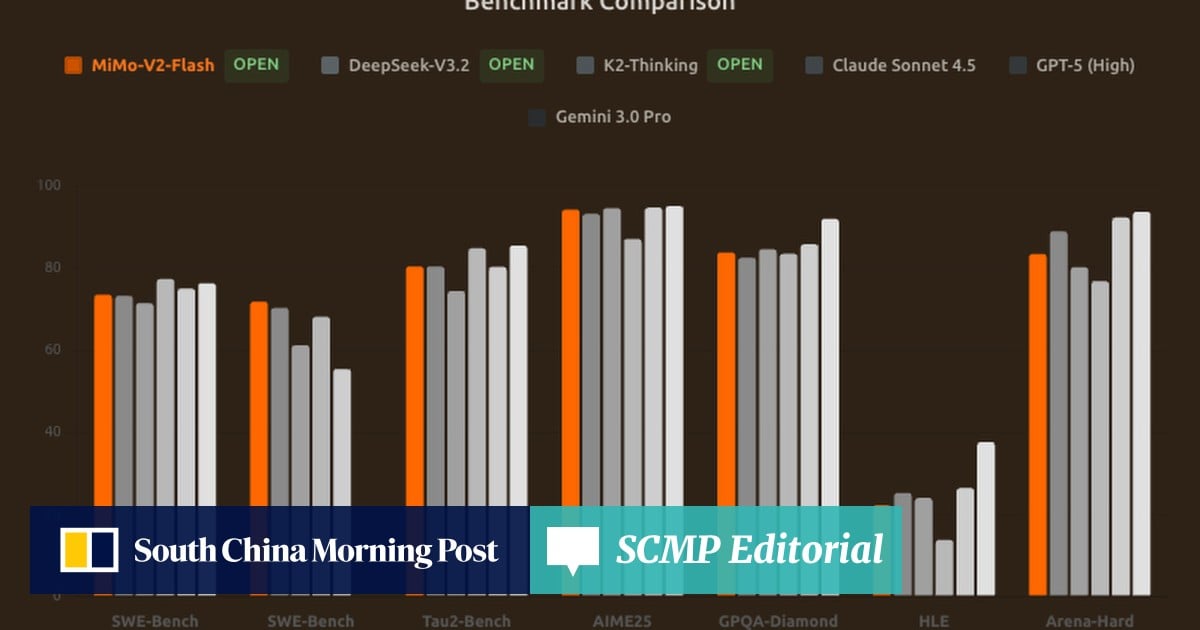
The Open-Source Gambit: Xiaomi's AI Counteroffensive
The AI landscape just got more crowded—and more interesting. Xiaomi has unveiled MiMo, an open-source artificial intelligence model that directly challenges the closed-door dominance of OpenAI, Google, and other established players. Rather than building proprietary walls, the Chinese tech giant is betting that transparency and accessibility can compete with raw computational power and venture capital.
This isn't a defensive move. According to reports, Xiaomi is doubling down on AI infrastructure, committing $5.6 billion to R&D next year—a signal that the company views artificial intelligence as central to its future, not peripheral.
What MiMo Represents
MiMo is positioned as a competitive alternative to closed-source models. The model is available on OpenRouter, where developers can access it directly. This distribution strategy mirrors the approach taken by Meta with Llama and other open-source initiatives, but with a critical difference: Xiaomi is a hardware-first company, not primarily a software or cloud services provider.
The implications are significant:
- Accessibility: Open-source models lower barriers to entry for startups and researchers who cannot afford proprietary API costs
- Customization: Developers can fine-tune MiMo for specific use cases without vendor lock-in
- Competitive Pressure: Every open-source release forces incumbents to justify their pricing and closed architectures
The Broader Context
Xiaomi's move arrives amid intensifying competition in the AI sector. DeepSeek's rapid rise demonstrated that Chinese companies can build competitive models at fraction of Western development costs. Xiaomi's investment announcement suggests the company is treating AI not as an experimental division but as a core business pillar.
The timing also reflects geopolitical realities. As Western AI companies face regulatory scrutiny and export restrictions, Chinese tech firms are accelerating domestic AI development. MiMo represents both a technical achievement and a strategic positioning move.
Technical Considerations
While Xiaomi has detailed MiMo's capabilities, questions remain about how it compares to established benchmarks. Open-source doesn't automatically mean inferior—but it does mean the burden of proof falls on users to validate performance claims independently.
The model's availability on OpenRouter suggests it's production-ready, at least for certain applications. Whether it can handle enterprise-grade workloads at scale remains an open question.
What This Means for the Industry
Xiaomi's entry into open-source AI signals a fundamental shift in how competition will play out. Rather than a winner-take-all market dominated by a handful of cloud providers, we may see a bifurcated landscape: proprietary models for enterprises willing to pay premium prices, and open-source alternatives for everyone else.
This dynamic benefits developers and researchers. It pressures incumbents to innovate faster and justify their value propositions beyond mere availability. And it suggests that the AI wars won't be won by closed ecosystems alone—accessibility and community matter.
The company's broader AI strategy indicates this is just the beginning. With $5.6 billion in annual R&D spending, Xiaomi has the resources to iterate rapidly and compete at scale. Whether MiMo becomes a household name or remains a niche player depends on adoption, performance, and how effectively Xiaomi markets it to developers.
Tags
Sources
Enjoyed this article?
Get the top AI stories delivered to your inbox every week. No spam, just the news that matters.
Join our weekly newsletter. Unsubscribe anytime.