Nvidia's Nemotron Models Signal Shift Toward Physical AI at CES 2026
Nvidia's latest Nemotron models represent a critical pivot from language-only AI to embodied robotics, with the company leveraging CES 2026 to position itself as the infrastructure backbone for the next wave of physical AI systems.
The Physical AI Moment Has Arrived
The race for AI dominance just shifted from the data center to the factory floor. Nvidia's latest announcements at CES 2026 reveal a company doubling down on what it calls "physical AI"—the convergence of large language models with robotics hardware. The Nemotron models aren't just incremental improvements; they represent Nvidia's strategic bet that the next trillion-dollar AI market won't be chatbots, but autonomous machines that can perceive, reason, and act in the real world.
This pivot matters because it exposes a fundamental gap in the current AI landscape. While competitors focus on inference optimization and model efficiency, Nvidia is building the entire stack—from the chips that power robots to the foundation models that teach them to move.
What Nemotron Brings to the Table
According to Nvidia's official announcement, the Nemotron models are specifically engineered for robotics applications, not general-purpose language tasks. This distinction is crucial. The models are optimized to:
- Process multimodal inputs: Vision, proprioception, and tactile feedback from robotic sensors
- Generate real-time control signals: Enabling robots to respond to dynamic environments without latency
- Scale across hardware platforms: From edge devices to Nvidia's data center GPUs
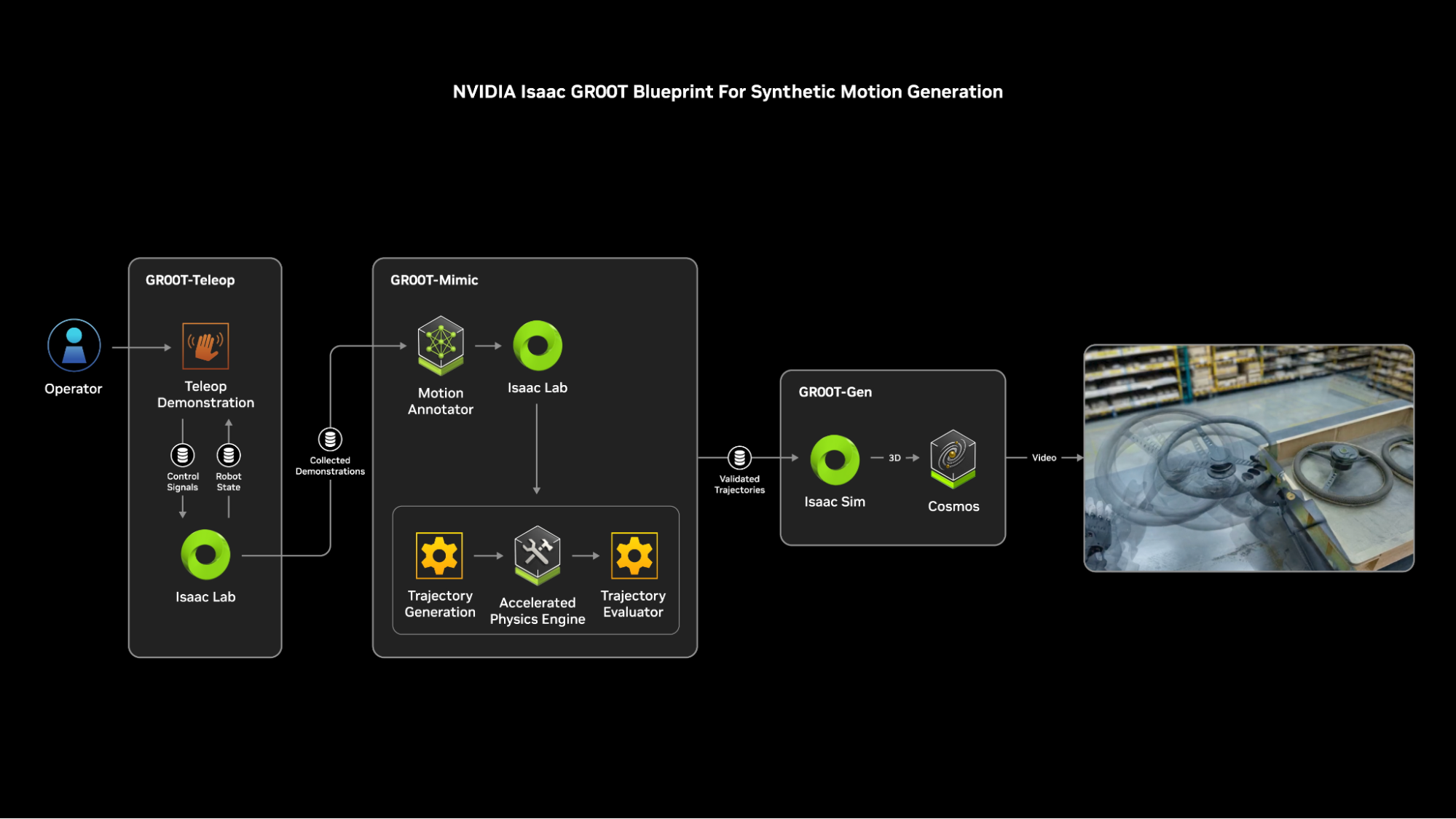
The company is positioning these models as the "brain" for what it calls the Isaac GR00T platform—a comprehensive robotics framework that includes simulation, training, and deployment tools. This ecosystem approach mirrors Nvidia's historical playbook: don't just sell chips, sell the entire developer experience.
The Competitive Angle
What makes this announcement significant isn't the technology alone—it's the timing and the message. As reported across CES 2026 coverage, multiple manufacturers are unveiling next-generation robots powered by Nvidia's stack. This creates a self-reinforcing cycle: more robots running Nvidia software drive demand for Nvidia hardware, which in turn attracts more developers to the platform.
Competitors like AMD and Intel have struggled to articulate a coherent robotics strategy. Amazon's robotics division operates largely independently. Meanwhile, Nvidia is weaving robotics into its broader AI narrative, making it difficult for rivals to compete without essentially building an alternative ecosystem from scratch.
Technical Considerations and Skepticism
The real test will be execution. Foundation models trained on internet-scale data don't always transfer cleanly to robotics, where safety, determinism, and real-time performance matter enormously. Nvidia claims the Nemotron models address these challenges, but independent benchmarks are still limited.
Additionally, the company's emphasis on its proprietary Isaac platform raises questions about openness. While Nvidia markets itself as supporting open standards, the tightest integration—and likely the best performance—will come from using Nvidia's full stack.
What's Next
Nvidia's GeForce announcements at CES 2026 suggest the company is also pushing physical AI capabilities down to consumer-grade hardware. This could democratize robotics development, but it also signals Nvidia's confidence that this market is about to explode.
The Nemotron models are a bet that the next decade of AI won't be defined by language understanding, but by machines that can understand and manipulate the physical world. Whether that bet pays off depends on whether the robotics industry can actually scale production and deployment—a challenge that no amount of software optimization can solve alone.
Tags
Enjoyed this article?
Get the top AI stories delivered to your inbox every week. No spam, just the news that matters.
Join our weekly newsletter. Unsubscribe anytime.